
 Sign In
 (817) 503-2334
 Contact Us





 By:
By:
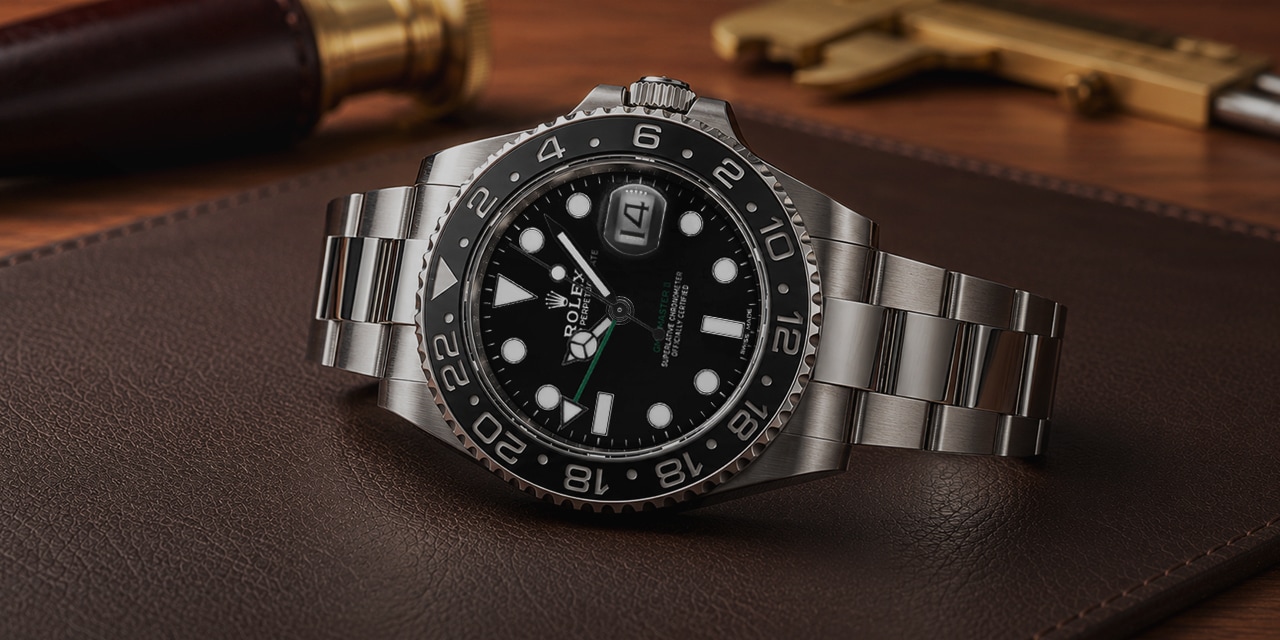
Top 10 Most Underrated Rolex Models to Invest in Right Now: Rolex GMT-Master II ref. 116710LN
As if you needed telling of the absolute randomness of the watch collecting world—i.e. why some pieces become the next big thing while others disappear into the ether, I present to you the Rolex GMT-Master II ref. 116710LN.
On paper, this is just about the surest of sure things when it comes to looking for that elusive future investment target.
Starting from the top; it is a steel Rolex sports watch (one of the biggest indicators it is going to be in high demand pretty much forever). It is also from the GMT-Master collection, inarguably the most loved and revered travel watches of them all. It is discontinued—meaning a finite supply, which equals increased value. Furthermore, it was the model to both introduce an innovative and important new component and the last one to feature a highly popular color scheme.
On the whole then you would imagine securing yourself one of these watches would be a massively expensive undertaking. But that is not the case; at least not yet.
Let’s look in a bit more detail.
A Little History
The ref. 116710LN was released in 2007 and became the third generation of the GMT-Master II. The original watch, the GMT-Master ref. 6542, had appeared in 1953 and taken the world by storm almost immediately. Buoyed by that success, Rolex worked to make it the best dual time zone model possible with the result that, in 1982, they figured out a movement which would allow the wearer to set the two hour hands independently of each other. With that innovation the watches could now be used to track three time zones and the new collection became the GMT-Master II.
However, each of the various generations had one thing in common; their bezels were integral to the personality of the family as a whole. The debut piece had arrived with a blue and red twin color surround, the blue half representing the night-time hours, red for the daytime. Others were added over the decades. That first, known as the Pepsi, was joined by a red and black color scheme (the Coke) and later by a host of others—brown and gold (Root Beer), blue and black (the Batman), black and green (the Sprite) etc.
So having two colors on the bezel was always key to the GMT-Master’s appeal, but there have long been examples with one solid color as well, for those less keen to draw attention. Most often, that color was black and there had been a solid black-bezeled GMT since the early ‘70s.
But all good things must come to an end, and the final appearance of an all-black GMT-Master II is actually our subject today, the ref. 116710LN. That LN at the end stands for Lunette Noir, or black bezel. It ran up until 2019 before being superseded by its ostensible replacement, the current ref. 126710GRNR. Here the GRNR stands for grey/black—nicknamed the Bruce Wayne, it has the same discreet vibe as the LN but is, in fact, a two-color model albeit a subtle one.
Yet, while the ref. 116710LN might have been the final example of one facet, it actually opened up the collection to new experiences in another. All the previous iterations’ bezels had been made from aluminum, except for the very earliest specimens which used Bakelite. The ref. 116710LN was the first steel GMT-Master II to be fitted with Rolex’s proprietary Cerachrom bezel.
The ceramic-based alloy was an in-house project for the brand and the end result of five years of intense effort. What they ended up with was an alloy which avoided all the weaknesses of the previous aluminum. Cerachrom was made to be fade resistant and scratchproof, meaning it would stay looking showroom fresh forever. Of course, this being watch collecting, there were plenty of collectors who rebelled against the material, citing the way the aluminum’s imperfections added interest and value to vintage models. Nevertheless, Cerachrom had arrived and was here to stay.
The GMT-Master II was, paradoxically, the watch chosen to debut the new bezels. The very first was the solid gold 50th anniversary ref. 116718LN in 2005, followed a year later by the Rolesor ref. 116713LN. The reason the GMT was a strange choice was that on its release, Rolex had yet to find a way to add a second color to their Cerachrom compound. That’s right, they chose a watch whose most famous aspect was its twin color bezel and used it to unveil a new material they could not put two colors on! Just Rolex doing Rolex things.
The Upgrades
What the watch, or brand, could not be faulted on was mechanics. Inside the ref. 116710LN sat the updated Cal. 3186. A replacement for the Cal. 3185, the two engines were, in most respects, completely identical.
Where they differed was in two key areas. The first was the introduction of another new alloy, this one in the shape of the Parachrom hairspring. Immune to the effects of temperature variation and magnetic fields, as well as being around 10 times more shockproof, the zirconium and niobium composite took over from the previous Nivarox springs.
And the other modernization was the moving of the drive train wheels closer to each other. The older Cal. 3185 was noted for the characteristic wobble of its GMT hand when setting the time. Rolex went to the expense and effort of eliminating it for the Cal. 3186.
Up front, the reference saw the inaugural example of the Super Case. Still sitting at 40mm in diameter, the piece gained extra wrist presence by wearing lugs and crown guards almost twice the thickness as before. The dial, too, saw a change. Indexes and handsets became far larger leading to easier readability, in a style known as the Maxi dial.
The bracelets received a lot of attention as well. Besides getting the Easylink extension for the first time, all the links were now solid, lending the watch as a whole a hefty solidity as befit a luxury sports model. Additionally, the central links of the Oyster bracelet were now polished, contributing to the feeling of indulgence.
A Viable Target?
Short answer: yes!
As alluded to at the beginning, why the ref. 116710LN hasn’t completely blown up on the preowned market yet is an absolute mystery. All the elements are present and correct, and there seems no reason at all why excellent examples are still readily available trading at around the $10k-$15k mark.
It might just be that there are still so many in circulation. As the watch was only retired seven years ago, there hasn’t been enough time for the supply to run dry. That would keep prices down—for now—and give credence to the idea that these are going to be strong performers in the future.
If I was a gambling man looking for a possible investment Rolex, I don’t think I would be straying too far away from the ref. 116710LN—a fantastic specimen of a beloved watch and one which ticks an awful lot of boxes.
Featured Photo: Mixed art by Oriol Mendivil for BKT Archive.