
 Sign In
 (817) 503-2334
 Contact Us





 By:
By:
The New Releases From Rolex 2026
The wait is finally over. This week, Watches & Wonders Geneva 2026 opened its doors for its annual horological extravaganza.
Of all the exhibitors—65 this year, making this the biggest event yet—the one most people came to see is, of course, Rolex.
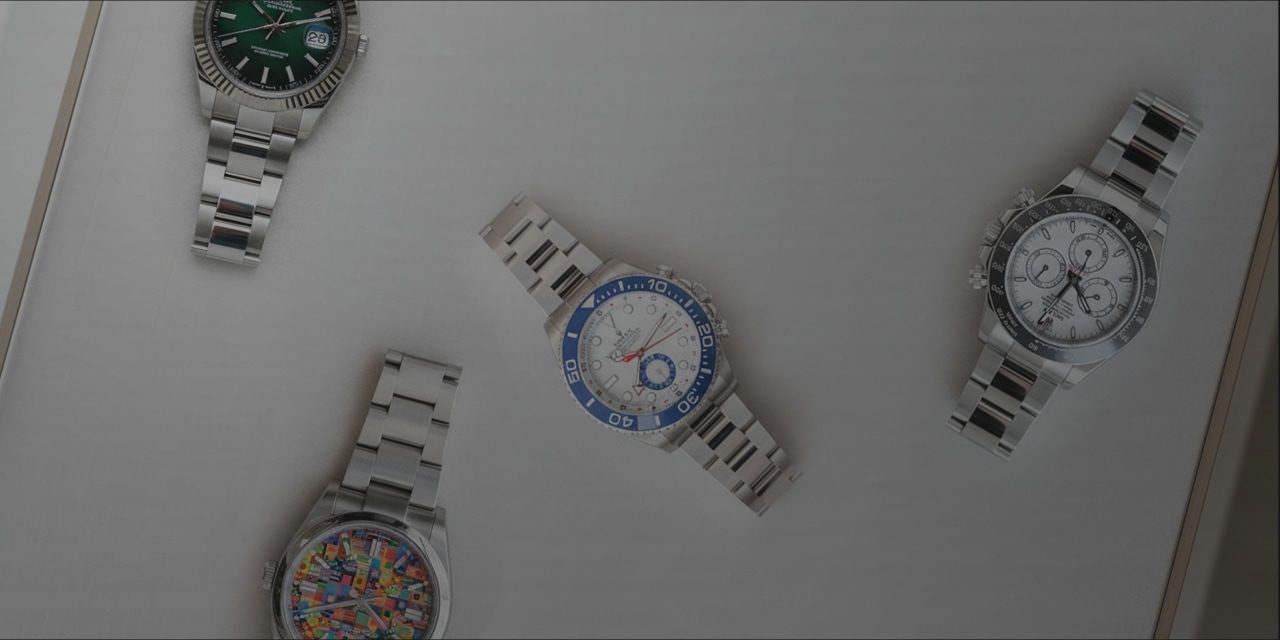
The crown arrived with a total of 58 new references and, while a little lacking in the surprise factor of last year, the range did cover a lot of ground. Within the collection we got tributes to Rolex’s greatest innovation, an all-new twist on their most successful ever sports model, a completely revitalized gold alloy and the return of an old face.
In addition, they also brought with them 11 off-catalog pieces reserved for the best of the best clients and only available through very select dealer boutiques.
We’re going to be covering many of the watches the brand has brought to market—and what they have taken away—in a whole bunch of individual articles over the next couple of weeks. But for now, read on below for the main rundown.
The Oyster Case Commemoration
As we mentioned in our previous ‘Predictions’ article, 2026 marks 100-years of the Oyster case; the first ever viably marketable waterproof wristwatch housing.
We knew there was going to be some acknowledgement of the occasion, and Rolex themselves hinted at what form it was going to take in their usual Friday-before-the-show teaser video.
The split-second clip showed what looked like a new model of the Oyster Perpetual—Rolex’s entry level offering and the most apt choice for a celebration of the case that changed everything—with a Rhodium dial, a long-absent Rolesor makeup and a ‘100-Years’ legend below the 6 o’clock where ‘Swiss Made’ usually is.
In the end, we got 11 new references of the OP. That slate dial/Rolesor layout has been introduced on both the 41mm and 31mm versions and, as we talked about previously, Rolex did indeed manage to slip some green detailing in there as well. A steadfast feature of the brand’s anniversary watches, here the ‘Rolex’ script on the dial is picked out in the color, and there’s a green dot above each hour marker too. In addition, the crown has been embossed with ‘100’ as well, giving a nice subtle nod to a mammoth achievement.
Elsewhere, both the 34mm and 28mm variants got four new models each. Dials come in black and white in both sizes, each with three natural stones at the 3/6/9 indexes. The 34mm also gets a stunning new blue dial and the 28mm has a striking green dial option now as well.
Most importantly, for the first time since 2001, these Oyster Perpetuals come in solid 18k gold. Two of the 34s and three of the 28s are in Everose, while the rest are in yellow.
There was one other OP unveiling at this year’s show. We said the Oyster Perpetual often acts as a platform for the more weird and wonderful dials Rolex dreams up, and so it is with their new take on the Jubilee dial. First seen on the Datejust in 1985 to celebrate its 40th birthday, the Jubilee dial featured a repeating ‘ROLEX’ monogram across its surface—a welcome sight in the brand name-obsessed ‘80s.
This year, we get a fresh take on the concept and…well, let’s just say it’s not to everyone’s taste! Only found on the 36mm steel example of the watch, the repeated name is still there, except this time it’s in a mash of multicolor. There’s no doubt it’s an eye-catcher but it’s been greeted with the same reservations as the Celebration dials a few years back. However, it that is anything to go by, the 2026 Jubilees will definitely catch on.
The Daytona Gets a New Look
Arguably the most important sports watch of all time, Rolex’s Cosmograph Daytona got a haute horlogerie touch this year.
Rolex brought out the ref. 126502, a steel model with platinum bezel ring, making this not only the first Rolesium Daytona but also the first non-Yacht-Master Rolesium watch in Rolex’s collection.
But while the metals are interesting enough, the dial of this reference is where the headlines are. The Albino-style face (all white, including sub dials) is Grand Feu, the French for ‘high fire’. It is made up of layers of enamel which are baked at 800°C, leaving a glossy finish like no other. It is a technique Rolex very rarely goes in for (the last example was 2023’s Day-Date ‘Jigsaw’ dial) and it is a technique requiring the work of true artisans. Even then, far more faces break than are used.
The bezel, too, is something different. Harking back to the first generation Daytonas, the tachymeter scale numerals are presented horizontally rather than following the curve of the surround.
On the underside, we get the exhibition case back Rolex introduced on the all-platinum versions of the watch last year so you can see the Cal. 4131 artwork.
If you’re looking for the Grand Feu Daytona on the website, you’ll notice it’s not part of the standard collection but instead on the ‘Exceptional Watches’ page. With a guide price of $57,800 for what is a mostly steel model, this is going to be available at select boutiques only.
Next Generation Yacht-Master II
We knew we saw those pushers on the video!
Rolex’s other chronograph has made a comeback this year, with the return after a two-year absence of the love-it-or-hate-it Yacht-Master II.
Originally unveiled in 2007, the YMII split opinions immediately; a big, brash, complicated and extremely expensive model built for a very niche client base.
As such, it became something of a cult offering—those who loved it, really loved it; others were put off by its highly un-Rolex nature.
So, what’s changed during its enforced hiatus? Well, it’s still big, coming in again at 44mm. The dial has been switched up, with the controversial regatta scale (basically a 1-10 minute countdown) moved from the inner dial to the perimeter. This alone gives a more traditional, cleaner style face. The bezel, too, is different. This also used to have a 1 to 10 scale which has now been replaced with a more conventional 60-minute one. It no longer screams YACHT-MASTER II at you across the bottom either.
And, surprisingly, the innovative and quite brilliant Ringlock is no longer needed. The system which linked the bezel to the movement in order to set all the functions has been superseded and all functionality is now controlled by those push pieces.
One thing which has stayed the same is the amount of damage this watch will inflict on bank accounts. It comes in a steel and a yellow gold version, the former retailing at around $20,300, the latter coming in at $57,800.
41 New Datejusts
As always, we got a host of new Datejust variations. The most striking of these was hinted at on the teaser, wearing a sumptuous green ombré dial.
In a first for this dial type at Rolex, the face has been colored by lacquering. A delicate technique which produces wonderful deep tones, the center of the dial is a lush green, graduating to darker edges. Here, the boundaries are so rich they appear pure black.
The dial has been fitted to a number of new DJs this year. On the 41mm it can be had on a steel model with either an Oyster bracelet and white gold fluted bezel, or with a Jubilee and smooth surround. Similarly, the 36mm gives you the option of both kinds of bracelet, each with domed bezels.
There are nine new 41mm models in total, comprised of five dial colors (green ombré, black, olive green, blue and white) and the different bracelet/bezel combinations. The white dial variant is available only with Jubilee and smooth surround.
With the 36mm, there are 32 new pieces. These copy the 41mm selection and add some slightly more outlandish options. Two particular standouts are the pink and especially the aubergine diamond dials. There are also 12 with precious stone-studded bezels to round things out.
High Jewelry Day-Dates
To finish things off, Rolex released just three new Day-Dates this year; one off-catalog 40mm, the other two both 36mm, both white gold and both heavily bejeweled.
Let’s start with the 40. The ref. 228235JG comes in the new proprietary Jubilee gold and is matched with an absolutely perfect green aventurine dial. For those wondering, aventurine is a type of quartz; a material which shimmers due to the inclusion of other minerals in its makeup, mostly chromium-rich mica. Here it is finished off with 10 baguette-cut diamonds for indexes.
As for the two 36mm pieces, the blue ombré-dialed model gets square and baguette-cut stones for its hour markers and a further 56 set into its bezel. At $68,900 it’s not cheap.
It is cheaper, however, than the other piece; a fully pavé dial model with rainbow indexes and the same diamond studded surround. That one won’t give any change from $98,100.
As we said, we’re going to be going into a lot more detail over the 2026 headliners from Watches & Wonders in future articles, including the range of other off-catalog references, and also the best that Tudor brought along.
Featured Photo: Mixed art by Oriol Mendivil.