
 Sign In
 (817) 503-2334
 Contact Us





 By:
The Most Famous Watches of All Time
Looking at the title of this post, ‘The Most Famous Watches of All Time,’ I realize it could be construed in one of two ways. Either we are going to be talking about the actual watches which are considered the most famous, or else that specific example of the model that has itself become renowned due to its owner.
In some cases there would definitely be some overlap. The Omega Speedmaster, for instance, is an absolute shoo-in for the first category, while the exact one worn by Buzz Aldrin is a dead cert for the second.
As a result, I’m going to do two articles. For this one, I’ll be focusing on those pieces which have, through a combination of historical significance, legacy, design bravado, engineering brilliance or just plain old desirability, achieved that most well-worn of epithets; iconic.
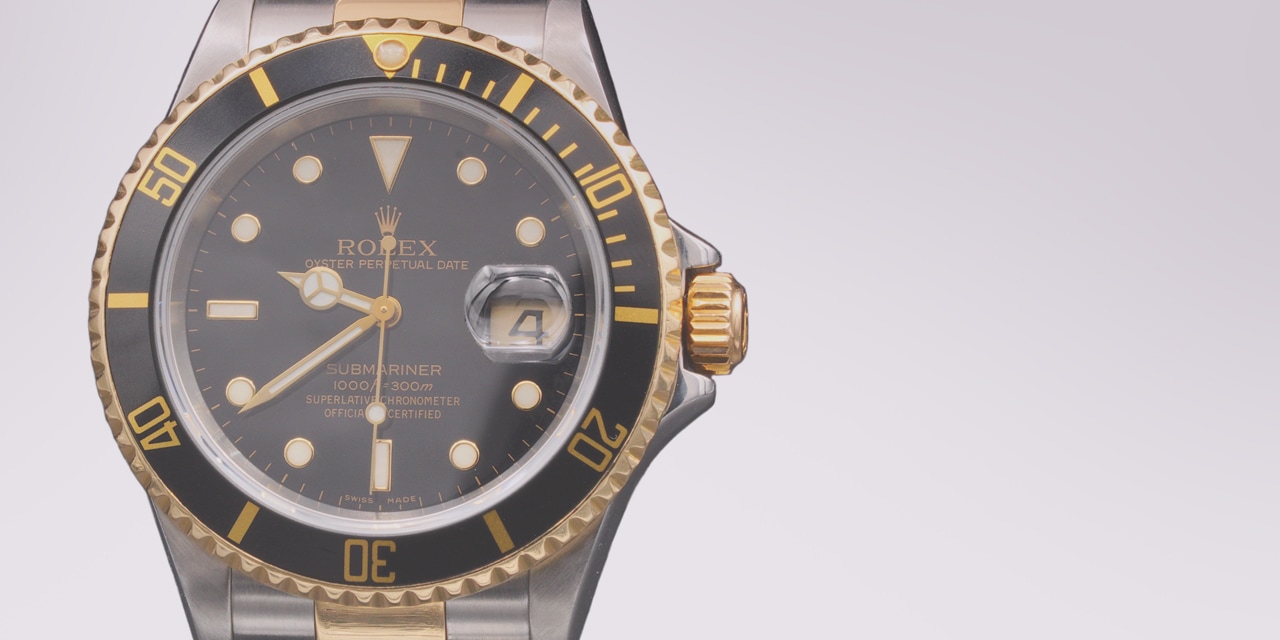
The Rolex Submariner
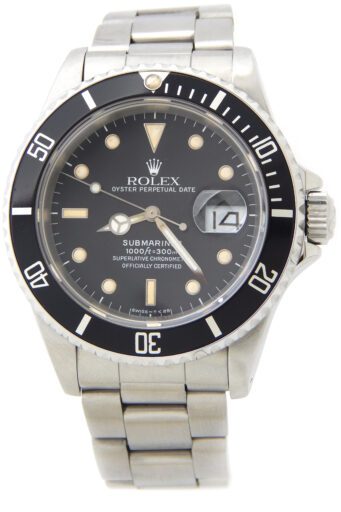
If you ever read a list like this that doesn’t include the Rolex Submariner in at least the top three, you’re reading the wrong list.
Arguably the piece more responsible than any other for Rolex’s current position as the most famous watchmaking brand of all time, the Sub is to dive watches what the Porsche 911 is to sports cars; the most influential, important, continuously improved upon and well-established timepiece ever made.
Arriving in 1953, the Submariner was the first watch to achieve the magic number of 100m of water resistance and was created to cater to the burgeoning sport of Scuba diving. With its timeless good looks and formidable talents, it would have dominated the field anyway. But when it appeared on Connery’s wrist as he fixed Dr. No’s wagon in 1962, its role as both definitive status symbol and cultural icon was secured.
Today, it still reigns supreme and holds the dubious honor of being the most emulated, copied and straight up counterfeited watch in the world.
Everyone wants a Submariner.

The Omega Speedmaster
Probably the only other watch that even gets close to the preeminence of the Submariner, the beloved Speedy was another ground-breaker in its day.
Released as part of Omega’s Professional Collection in 1957, alongside the initial Seamaster 300 and Railmaster models, the Speedmaster was the first chronograph wristwatch to move its tachymeter scale onto its bezel rather than having it printed on the dial.
That cleared up enough room to make it one of the most legible and easily read watches of its type—just one factor in its favor when it won the ultimate marketing bonanza of being selected by NASA as its official timepiece in 1965.
On every space mission since, a Speedmaster has been present including the big one, when Aldrin first stepped onto the moon (Armstrong had to leave his in the orbiting capsule as a backup to a malfunctioning timer).
There has been an absolute cavalcade of pieces bearing the Speedmaster name over the last six decades, with everything from cheap LCD digital watches to quartz-powered analogs and up through the haute horlogerie examples boasting remarkable complications, ranging from rattrapante, perpetual calendar and moonphase versions, and now even the extraordinary Chrono Chime with its glorious striking mechanism.
But the wonderful steel-cased Professional Moonwatch will always be the epitome of what the Speedy first set out to be—perhaps the most successful execution of the mechanical chronograph in history.
The Audemars Piguet Royal Oak
Although today it (just might) be recognized as something of a pillar of the establishment, when it was released in 1972, the Royal Oak from Audemars Piguet delivered a monumental shakeup to the entire industry.
It was the watch that made a superstar of its designer, the incomparable Gérald Genta. He it was who, as legend has it, took the call from George Golay, managing director of AP, at 4pm one April afternoon asking him to pen a completely new type of watch. And there were two major caveats. Firstly, it was to be a luxury steel sports watch, a category which simply didn’t exist in the 1970s. And secondly, Golay needed it by the following morning.
Somehow, Genta delivered, and what he delivered has gone on to be regarded as among the most significant timepieces ever.
Where the style at the time heavily favored round cases, Genta dove (literally) into the avant-garde, basing his new piece’s octagonal bezel on the look of deep-sea divers’ helmets. The eight visible screws securing the surround in place were another massive departure, as was the unique integrated bracelet and the trademark petite tapisserie finished dial.
Releasing the Royal Oak would have been an audacious move at any time, but it was an extraordinarily ballsy one in the midst of the quartz crisis. In many ways, it was a last throw of the dice for Audemars Piguet in the face of the devastation brought on by the influx of battery-powered watches from the Far East. And, to the relief of us all, it paid off in spades. Not only did it save AP, it could be argued that it went some way in reawakening the public’s love for the artistry of the mechanical watch.
Today, the Royal Oak can rightfully take its place among the pantheon of the most famous watches of all time.

The Rolex Datejust
Much like the Royal Oak some 30-years later, the Datejust from Rolex was an absolute gamechanger in the 1940s. And it was not, entirely, down to its abilities.
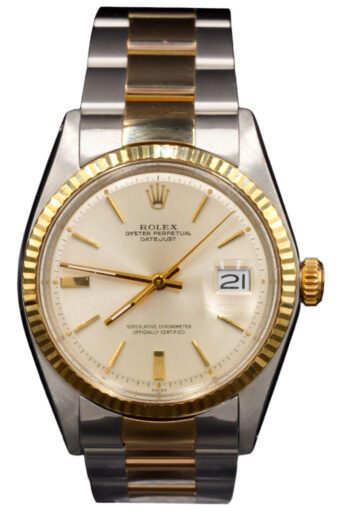
Yes, it is recognized as the first waterproof, self-winding wristwatch ever made to display a date function. That was what it could do, but just as important was its appearance.
If you asked someone today to draw ‘a watch’, the result, more often than not, would resemble a Datejust. Its whole silhouette, that perfectly functional rounded tonneau case sweeping into its bracelet, is exactly what a watch should look like.
Then, of course, there are the options. While it may have once been the Rolex standard-bearer, the top-rated offering in the collection, that accolade was usurped only a decade later by the Day-Date. The Datejust was then repurposed as an everyman model. Hand-in-hand with that, Rolex began giving customers the facility to more-or-less customize the watch to their liking through an almost inexhaustible range of different dial, index, bezel, metal, size and bracelet choices. The number of distinct Datejust models which have been released over the years is nigh-on uncountable and goes a long way to explaining why it—not the Submariner, not the GMT-Master, not the Daytona—has consistently been the biggest-selling Rolex model in history.
As versatile as a chameleon with a Swiss Army knife, the Datejust is an unbeatable creation.

The Breitling Navitimer
Although this list isn’t really in any numerical order of relevance, picking the final piece to round it off is unusually tricky.
Plenty of arguments could be made for the likes of Patek’s Nautilus, Cartier’s Tank or Santos, Heuer’s Monaco, Rolex’s Daytona and a host of others.
However, I’ve elected to go with the Navitimer from Breitling, because I think it epitomizes a standard for one particular group demographic as roundly as the Rolex Submariner does for divers; in the beginning, at least.
That group is, of course, pilots. The Navi was released in 1954 and, as with so many iconic watches, came about through necessity. A time long before the kind of sophisticated route-finding instrumentation we view as normal in today’s aircraft, a wrist-worn computer for aviators was a must for navigation. As a result, AOPA (the Aircraft Owners & Pilots Association) worked in conjunction with Breitling on a solution.
The Navitimer was the result, and its immediate adoption by AOPA as their official timepiece quickly made it a favorite for pilots the world over.
By using its logarithmic slide rule bezel, the watch could be used to determine a whole slew of calculations vital to the safe operation of an aircraft—average speed, distance traveled, rate of climb or descent, fuel consumption, etc.
That it did it in a highly distinctive and attractive package which was visually intimidating to the uninitiated only made it more desirable.
Like the others on our list, the stylistic differences between vintage Navis and the ones you can buy today are minimal at best. Iconic watches generally become iconic because they nail their look from the getgo.
Also as with the rest of our list, that original form has been coopted into an entire range of disparate models, aimed at attracting as wide a fanbase as possible—only a tiny fraction of whom, one supposes, regularly take control of an airplane.
Watches made for pilots actually constitute the oldest type of tool watch, which goes all the way back to the aforementioned Cartier Santos. These days, just about every brand makes aviation-themed pieces. But nowhere is there a more instantly recognizable example of the genre than Breitling’s Navitimer.
Featured Photo: BeckerTime’s Archive.