
 Sign In
 (817) 503-2334
 Contact Us





 By:
By:
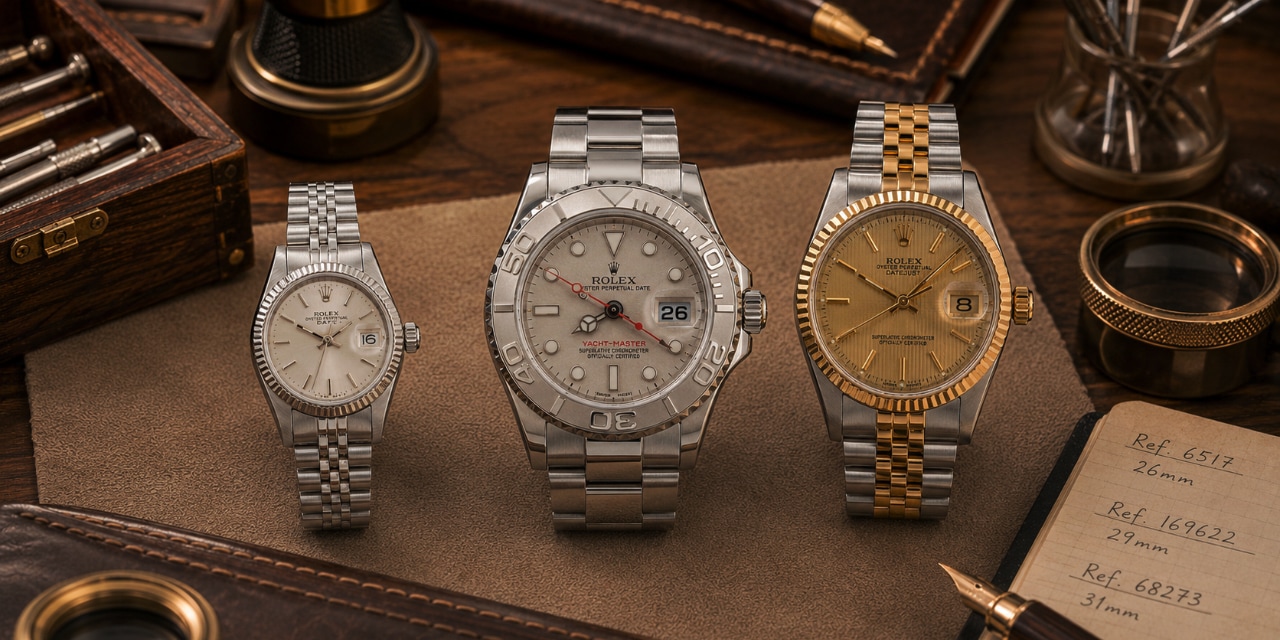
Women and Rolex: The Favorites
Rolex is renowned for doing more to popularize the wristwatch as a male accessory than any other manufacture in history. The early 20th century inventions of the Oyster case and Perpetual movement gave their creations the necessary levels of robust strength and convenience to outdo the ubiquitous pocket watch; the only way men had told the time for hundreds of years.
However, that revolution did not occur overnight.
When Hans Wilsdorf founded his company in 1905, wristwatches were still very much delicate pieces of feminine jewelry and would stay that way for the next couple of decades. It wasn’t really until the end of WWI that the wristwatch proved itself masculine enough for the male population.
That meant the formative years of the company were almost entirely dedicated to ladies models, known at the time as wristlets. In fact, the two most significant Rolex breakthroughs in the earliest part of the century—the first wristwatch to win a First Class Chronometer Certificate and the first to win a Class A Chronometer Certificate from the Kew Observatory—were both awarded to women’s watches.
Battle of the Sexes
After the returning soldiers of the First World War gave the wristwatch the image boost it sorely needed, Rolex worked hard to propagate the appeal. More and more of their output concentrated on men, but by no means all.
When the Oyster case was introduced in 1926, followed in 1931 by the Perpetual movement (giving the world the beginnings of the Oyster Perpetual collection), the watches were sized very much as a unisex—before that was even a term. With dimensions in the 28mm-32mm window, they were often worn by either gender.
It was really the Second World War where the disparity in diameters started to take effect.
At the start of the war, British RAF pilots bought Oyster Perpetuals, famously with their own money, preferring the legibility provided by their larger size over their government-issue models. On learning this, Wilsdorf commissioned his ‘Air’ range, a group of four dedicated pilots’ watches; the Air-Lion, Air-Tiger, Air-Giant and Air-King. By the end of hostilities in 1945, only the Air-King remained and measured 34mm—large for the time. The same year, the Datejust debuted at 36mm and it was really from that point on that the concept of separate watches for men and women originated.
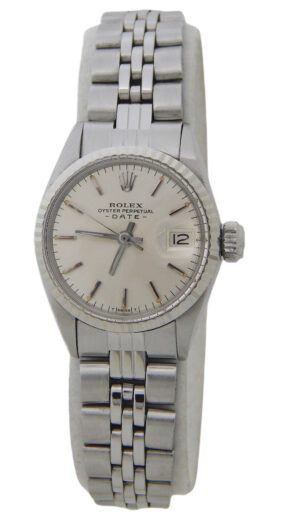
But, of course, Rolex did not become the behemoth it is today by excluding half of the watch buying public. In 1957, a scaled down 26mm version of the Datejust emerged and achieved two things. It became the most famous ladies watch ever, and the best-selling Rolex—out of every model made before or since—of all time. The Lady-Datejust has always epitomized the most impressive elements of the brand. Not only does it offer an incredible scope of different dial, metal, bezel and bracelet options, as does its male-focused originator, it arguably surpasses the men’s Datejust in terms of engineering brilliance. The movements inside the women’s variant perform at least as well if not better than the full-size piece and do so with vastly smaller components.
Today, the Datejust family covers four different sizes, although only the 28mm model (the size was increased in 2015) is still designated as the Lady-Datejust. That being said, the next size up, a 31mm, is clearly aimed at women too, with modern tastes being what they are.
The Ladies Collections
While it may definitely be the most well-known, the Lady-Datejust is not the only watch in the current line-up aimed solely at women.
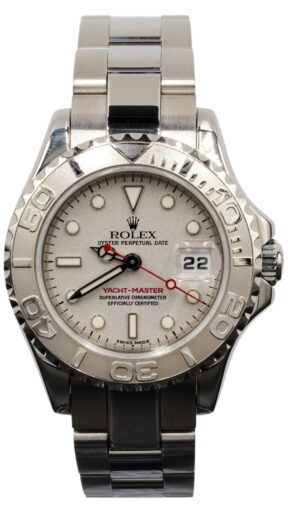
The Oyster Perpetual collection actually offers even more sizing choice, with a total of five, the smallest two (again coming in at 28mm and 31mm) obviously marketed to a female audience.
Up until 2022, Rolex also had the Pearlmaster series. These were, at their base, Datejusts, with the same fundamental shape and complications. But they came in some unorthodox sizes—29mm, 34mm and 39mm; each one crafted in gold and heavily bejeweled. Now, while those two larger sizes made the Pearlmaster somewhat unisex, the vast majority were still bought and worn exclusively by women and that goes someway to explain why there are not more dedicated women’s ranges in the Rolex portfolio.
In more recent times, the line between what constitutes men’s watches and women’s watches has become decidedly blurred. Spurred on by Hollywood actresses and other celebrities spotted wearing traditionally ‘men’s’ Rolex models, a far greater proportion of women have taken to sporting GMT-Masters, Daytonas and the like; 40mm+ pieces once considered far too large for a lady’s wrist. These days it is so common as to not be remarkable at all.
And for those who want to keep the more feminine dimensions but in a sportier form, Rolex used to offer a 29mm Yacht-Master—essentially a downsized and fancied-up Submariner. While no longer part of the collection, the current smallest YM, coming in at 37mm, is a very handy unisex too.
The Most Collectible Ladies Rolex Watches
Just as with the men’s models, many of Rolex’s ladies watches are or are becoming increasingly valuable.
For those interested in collecting these pieces, both modern and vintage, the same rules which govern the prices of the men’s ranges also apply here—namely rarity, provenance and historical significance.
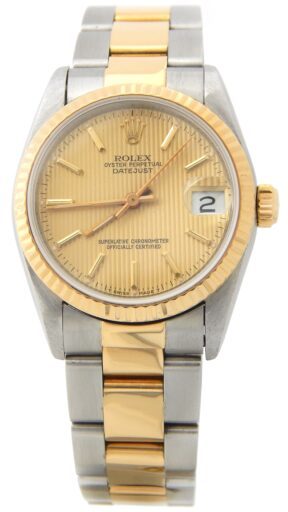
The pre-WWII Bubbleback models, for instance, are a fascinating look at early Rolex and their variety of case shapes before the manufacture homogenized their output. It was, of course, one of these pieces which gave Rolex their first great marketing boost when it was worn by Mercedes Gleitze during her English Channel swim.
In an ironic twist, anyone who has watched any major award shows recently might have spotted tiny Bubblebacks worn by male superstars on the red carpet—Timothée Chalamet and Tyler the Creator being just two. These minute watches, rarely any larger than 32mm, are surprisingly affordable at the moment; but possibly not for too much longer. Sales appear to be increasing rapidly and many savvy collectors are getting in quick.
Elsewhere, those original Lady-Datejusts from Rolex’s first 1950’s heyday perform very well on the secondary market. Those in solid gold and/or with unusual dial colors or gemstone indexes are fairly rare these days and can fetch between $10,000 to $25,000+.
Similarly, the 80s and 90s references of the Lady-Datejust offer more in the way of convenience and an even wider array of dials to choose from. Top-of-the-range examples with turquoise dials can be valued at anything up to $50,000 for one in excellent condition. However, at the other end, steel or Rolesor pieces can be had for as little as $5,000.
But arguably the best all-rounder as a preowned or vintage buy has to be those Ladies Yacht-Master models. While they were discontinued in 2015, they are pretty much as modern a Rolex as you can get, with all the latest technology. You will find them in solid yellow gold for around $12-$13,000, Rolesor for even less (about $7,500 as a start point) and in steel for around $6,000.
An underrated watch and a genuine bargain, the 29mm sports model is perfect for any occasion.
Featured Photo: Mixed art by Oriol Mendivil for BKT Archive.